Voyaging, Culture and Science Come Together as Mauke and Atiu Complete the First Te Reinga Aorangi Marine Citizen Science Pilots
Cook Islands | 21 August 2026
Youth strengthen their skills to monitor and care for their reefs
Students and communities in Mauke and Atiu have completed the first field pilots of the Te Reinga Aorangi Marine Citizen Science Programme, marking a major step in bringing the Kura Tapu vision into practice through culture-based education, traditional knowledge, voyaging heritage and hands-on reef monitoring.
Through the pilots, young people gained practical skills to observe, document and support the care of the marine environments that sustain their islands.
Co-developed with Pa Enua communities, the programme combines traditional ecological knowledge with accessible scientific methods, helping students connect ancestral knowledge with practical tools for understanding reef health.
Students learned how to undertake biodiversity surveys and use marine monitoring tools, including photogrammetry and underwater video transects.
Designed with communities, delivered for communities
Te Reinga Aorangi was developed through Pa Enua consultations and a national co-development workshop held in Rarotonga in March 2026.
The workshop brought together traditional leaders, educators, community representatives, government agencies and knowledge holders from Atiu, Mauke and Mangaia to shape an approach grounded in local priorities and the Kura Tapu vision.
The process identified island-specific monitoring priorities and created a programme that brings together community knowledge, scientific approaches and local responsibilities.
The programme is delivered as part of the CI-GEF ICI and NZ MFAT Manaaki Cook Islands Project, led by UANKA Inc. and the House of Ariki in partnership with Conservation International. It supports the vision of the E Kura Akataka-Pātoa, or Kura Tapu, Manifesto by connecting education, culture and environmental stewardship.
A voyage of knowledge, culture and ocean stewardship
The journey began when Marumaru Atua departed Rarotonga on Monday, 6 July 2026, arriving in Mauke the following day.
Its arrival was welcomed through a traditional ceremony featuring a turo, or formal challenge and welcome, followed by a smoke blessing honouring the enduring relationship between people, place and the ocean.
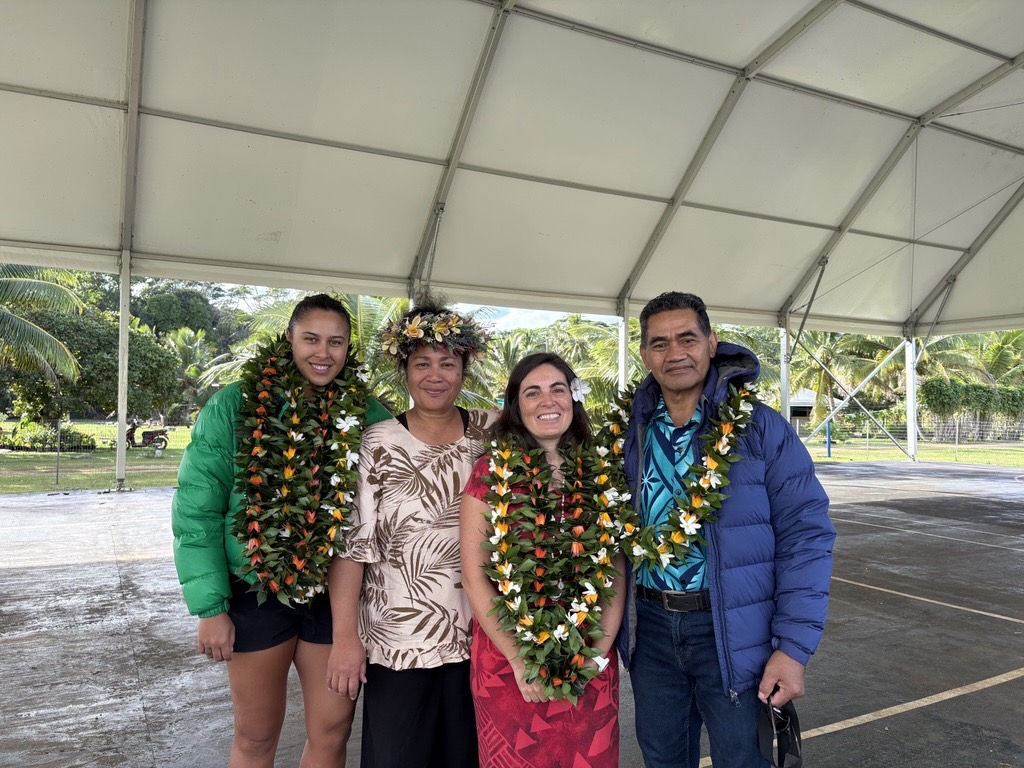
The welcome continued at Island Government House, where Teau Ariki, Her Worship Mayor Joanne Stephens, representatives of the Religious Advisory Council, Member of Parliament Stephen Matapo, Puna Rakanui, local leaders, members of the Mauke school community and the wider community gathered to receive the Cook Islands Voyaging Society crew and Conservation International facilitators.
The occasion celebrated cultural knowledge, language and intergenerational learning. The passing of the turo from one generation to the next provided a powerful symbol of this living connection.
The ceremony marked the beginning of two days of marine citizen science and a week of experiential education in Mauke.
The vaka then continued to Atiu, where the first challenge to Marumaru Atua was presented on the ocean by Makopi Mataiapo Tutara, the keeper of the harbour. Traditionally, Makopi Mataiapo Tutara welcomes and farewells visitors arriving through the Taunganui passage to Atiu.
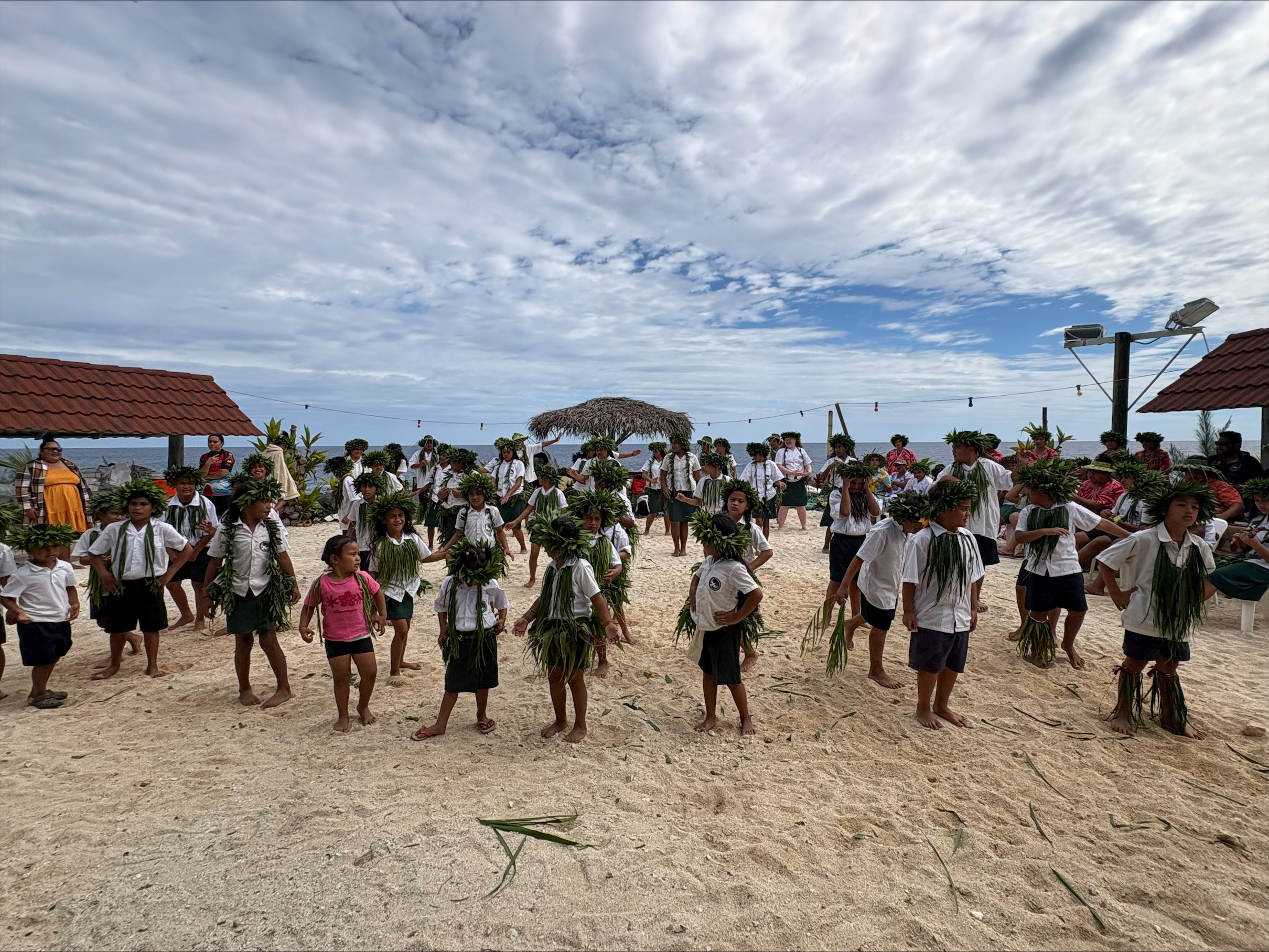
Led by UANKA focal point Terangi Tatuava, the entire Atiu school community assembled at Taunganui Harbour. The welcome was graced by the presence of His Worship Mayor Timau Mokoroa, Ngamaru Ariki, Rongomatane Ariki, the Honourable Minister Rose Brown, Associate Minister Tehani Brown, representatives of the Atiu Religious Advisory Council, Council members and various Aronga Mana.
Local leaders, community members and students welcomed the crew through traditional chanting, singing and cultural hospitality.
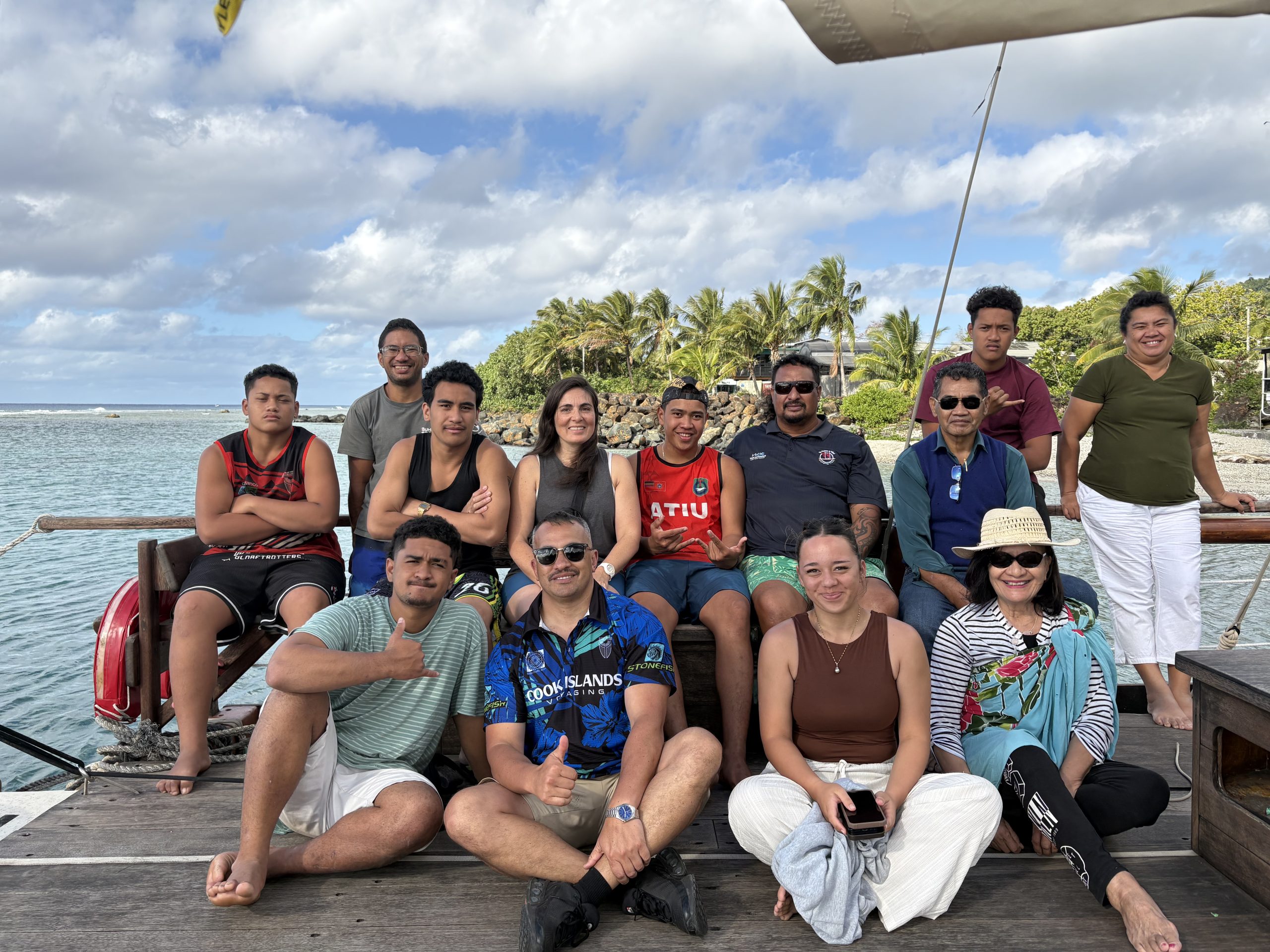
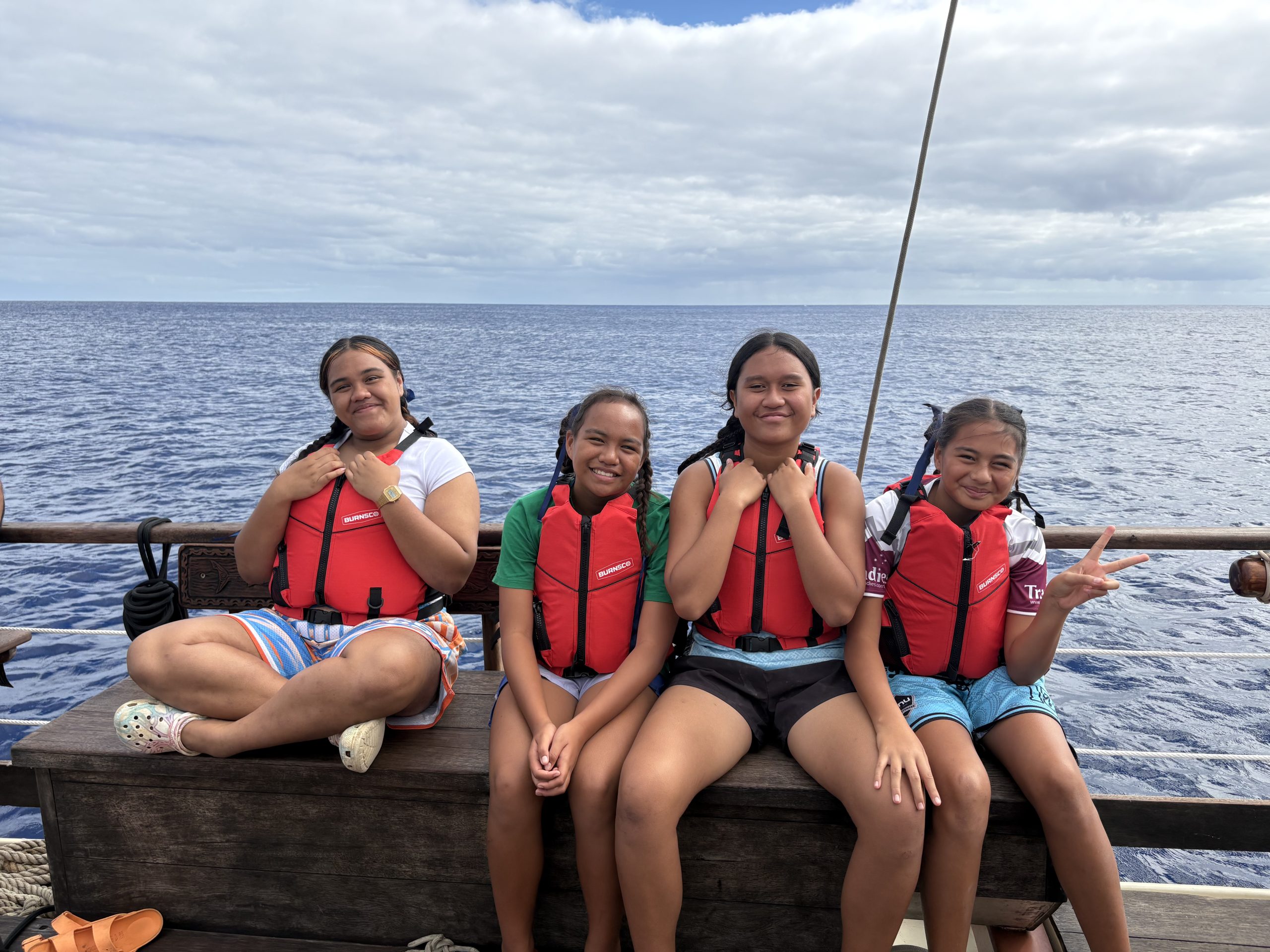
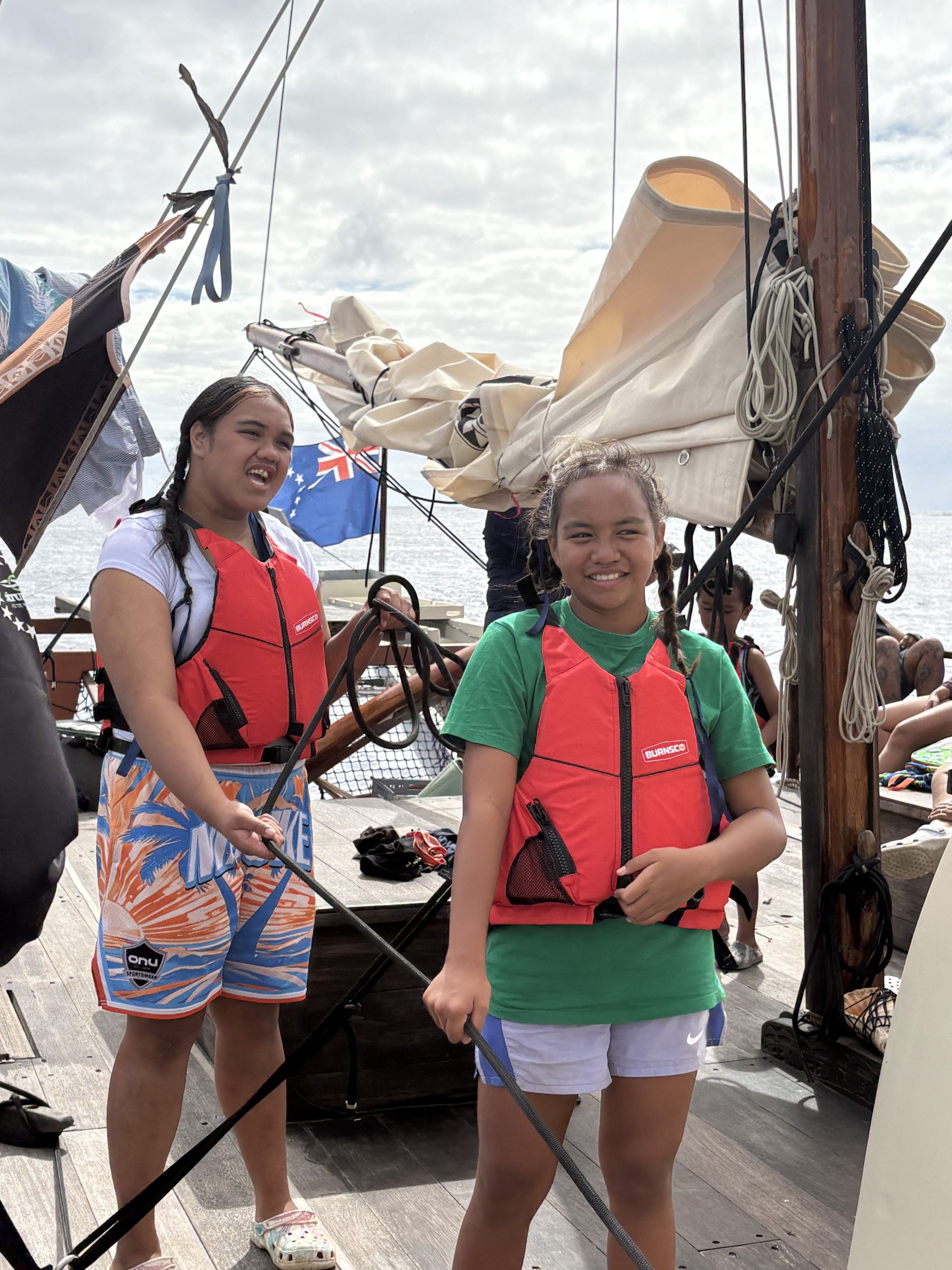
More than a vessel, Marumaru Atua became a living classroom, carrying knowledge between islands and generations. Its presence connected students to the skills of navigation, observation, discipline and care that have long shaped Cook Islands relationships with the ocean.
“When young people step onto Marumaru Atua, they are not only learning how to sail. They are gaining practical knowledge about how our ancestors navigated using the winds, currents and stars, and how these traditional skills remain relevant today.
“This voyage helps reconnect young people with our past, giving them a stronger understanding of their Cook Islands identity and the important role voyaging has played in our history. It also gives students the opportunity to better understand the ocean environment and the importance of preserving and passing this knowledge on to future generations.”
Captain Deon Wong, Cook Islands Voyaging Society
Across both islands, the vaka served as a powerful link between voyaging knowledge, marine learning and community stewardship.
Island leaders, cultural practitioners and community members helped shape the Citizen Science Programme through its co-development process, welcomed the vaka and laid the foundation for the pilots.
Students and teachers then carried that learning into the field through hands-on activities, ensuring Te Reinga Aorangi remained guided by local leadership, cultural knowledge and the priorities of the communities it serves.
Learning to monitor life beneath the waves
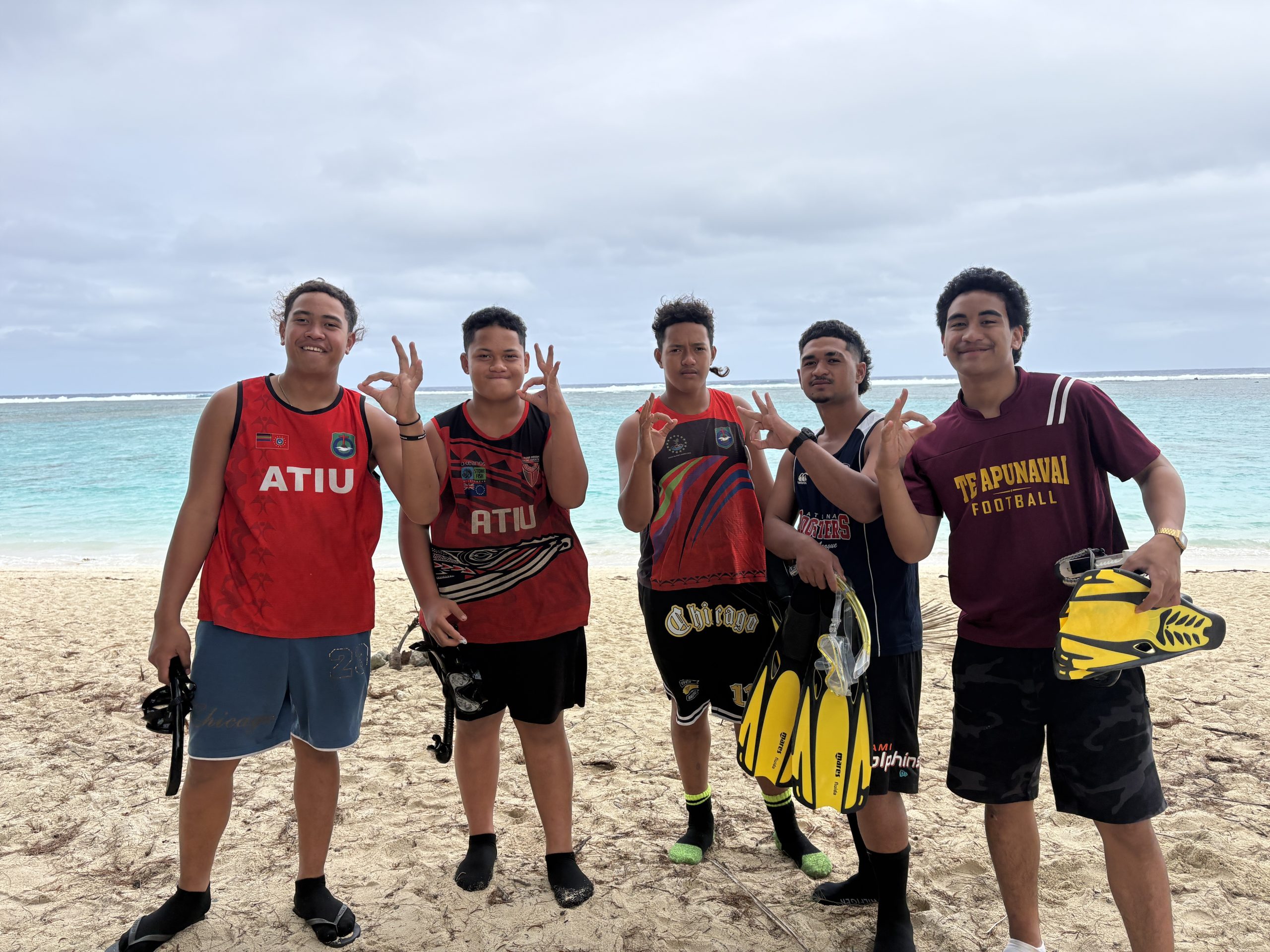
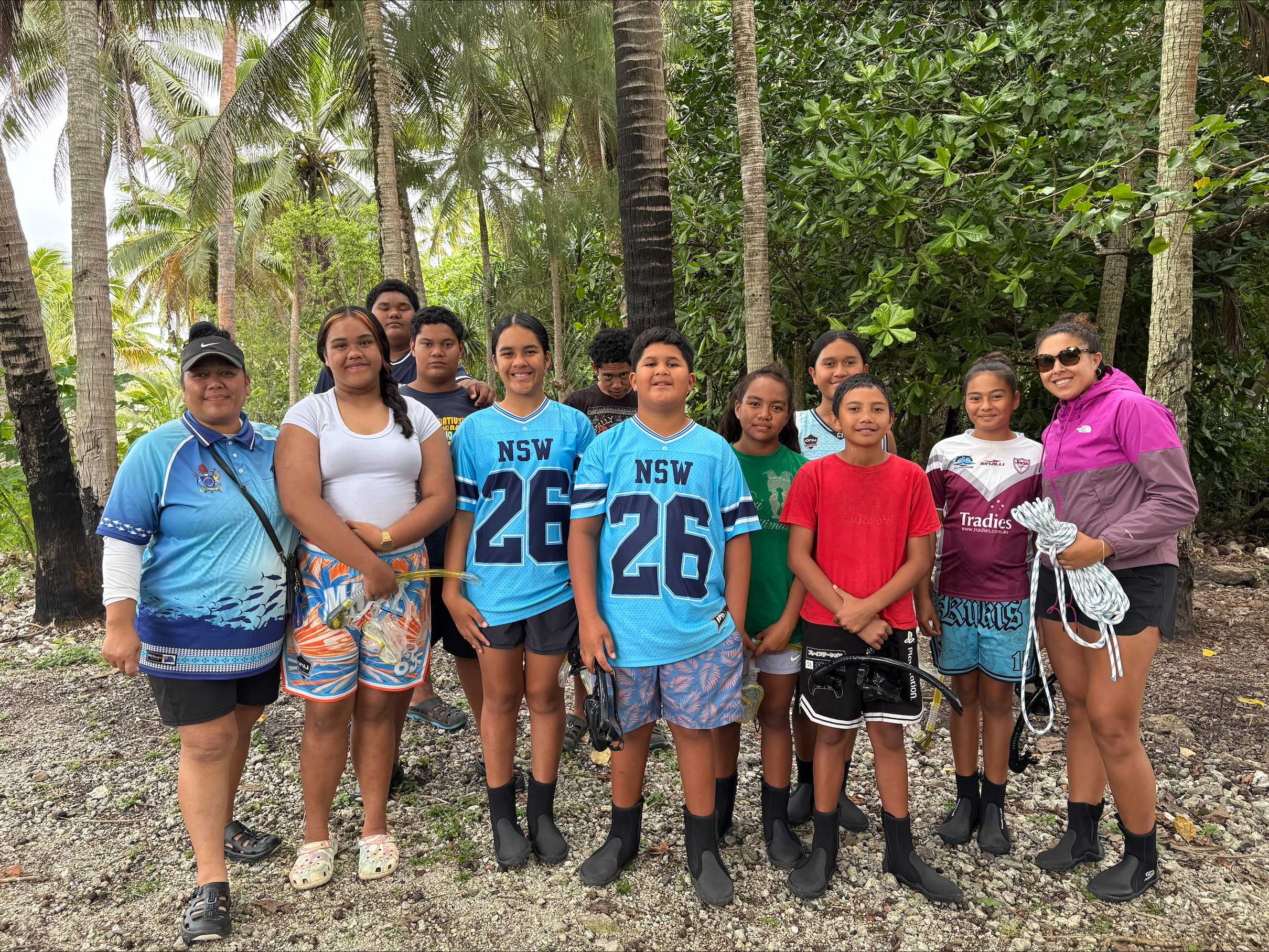
Thirty-two students from Years 7 to 11 took part in practical reef monitoring across both islands.
They learned how to use monitoring equipment, create three-dimensional reef models through photogrammetry and conduct underwater video transects.
“This week I learned something new. I learned how to use photogrammetry and how to tell the difference between healthy and unhealthy coral.
“I want to share what I learned with my family and friends so we can help keep our ocean healthy, our coral reefs alive and growing, and provide a home for fish while supporting the people who depend on the sea.”
Keziah Wichman, Āpi’i Enuamanu School, Atiu
The training focused on monitoring fish, corals and other sessile species, including giant clams. Students explored how photographs and video can be transformed into information about reef biodiversity, building a foundation for future community-led monitoring.
“I am very grateful for the opportunity provided to our students. They truly valued the experience, and it was wonderful to see meaningful learning brought to our island and our school.
“Opportunities like this allow students to connect what they learn in the classroom with our environment, culture and wider community, making learning more relevant and memorable.”
Maria Aiturau-Tereia, Principal of Āpi’i Mauke
In Mauke, the citizen science pilot was delivered alongside the Cook Islands Experiential Education Pilot. Students and teachers took part in learning modules shaped around local knowledge, cultural practices and environmental stewardship.
Students explored traditional navigation concepts, including the Ara Mātangi, or traditional compass, and Arapo, the traditional lunar calendar, as well as weather indicators and the cultivation and preservation of food.
A guided visit to Marumaru Atua, led by the Cook Islands Voyaging Society, gave students in Atiu and Mauke the opportunity to learn about voyaging and sailing. It highlighted the relationship between navigation, culture and the ocean while complementing the marine monitoring skills students were developing.
New tools for ongoing guardianship
All monitoring equipment used during the pilots has been handed over to the respective islands, providing practical resources for future learning, observation and marine stewardship.
“These students are the future guardians of these waters. Te Reinga Aorangi has given them new tools, skills and inspiration to better understand, monitor and contribute to the care of their reefs, strengthening the connection between knowledge, responsibility and action.”
Puna Rakanui, Secretary General of UANKA
The successful completion of the Mauke and Atiu pilots is an important milestone for Te Reinga Aorangi. It demonstrates how scientific tools can work alongside traditional knowledge to strengthen community commitments to being responsible stewards of their marine environment.
A third Te Reinga Aorangi pilot is planned for Mangaia during the week of 24 August 2026. This will complete the first cycle of island-based learning and further strengthen reef monitoring and youth leadership across the selected pilot islands.
UANKA, in collaboration with its partners, is also delivering its first navigation and customary seafaring training programme for young people.
Participants from Atiu and Mangaia, aged 14 to 17, are receiving a week-long training programme delivered by the Cook Islands Voyaging Society in collaboration with Conservation International. The programme combines voyaging knowledge with practical marine monitoring skills.
Through this experience, students will strengthen their understanding of the ocean, build practical monitoring skills and deepen their connection to voyaging knowledge as guardians of their marine environment.
Notes
Citizen Science Programme: A community-based approach to scientific research in which community members actively participate in collecting data and contributing to scientific projects.
Kura Tapu: A customary vision developed by the Ui Ariki of the Cook Islands and submitted to the National Education Symposium in 2025.
Media Coverage:
Cook Islands Advances Culture-Based Education Reform Through Inclusive Co-
Design Initiative: https://pacific.scoop.co.nz/2026/03/cook-islands-advances-culture-
based-education-reform-through-inclusive-co-design-initiative/
Culture-based education reform gains momentum: Culture-based education
reform gains momentum - Cook Islands News
Media Contact
Emmeline Johansen
Senior Director, Media Asia-Pacific Media
Conservation International Aotearoa
ejohansen@conservation.org
Esther Tetava – Haus of Skai
Communication Consultant - UANKA
hausofskai@gmail.com

0 Comments